


Table of Contents
- Why High Quality T-Shirts Shrink
- The Role of Washing Temperature and Agitation
- Pre-Shrunk vs. Non-Pre-Shrunk Manufacturing
- How to Tell If Clothing Is High Quality
- How to Prevent Clothes from Shrinking
- How to Stretch Out a Shrunken Shirt
- Conclusion
Last Updated: August 22, 2026
Why High Quality T-Shirts Shrink
High quality t-shirts shrink because natural cotton fibers respond to heat, moisture, and mechanical stress during manufacturing, washing, and drying. Understanding why this happens, and that it's not a defect, helps you protect your investment in better-made apparel.
You buy a premium tee that fits perfectly in the store. After a few washes, it's noticeably smaller. This happens to high quality t-shirts more often than cheap ones, which seems backward. But the reason reveals something important about what makes clothing durable in the first place.
Natural Fibers and Cellulose Structure
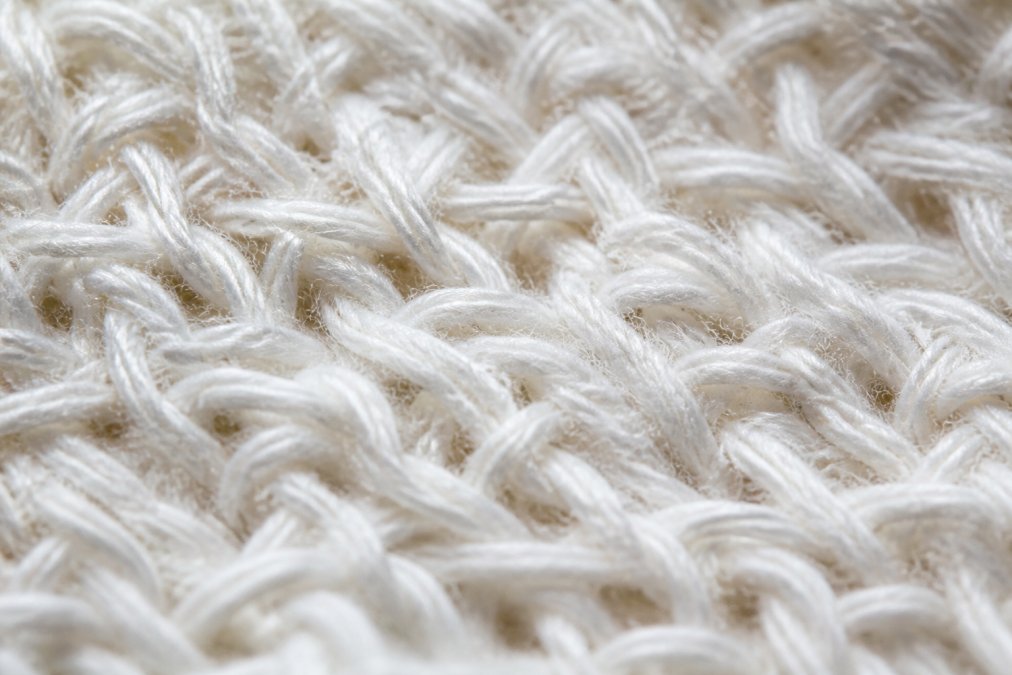
Cotton is made of cellulose, a natural polymer that absorbs and releases moisture. When cotton fibers are manufactured into yarn and woven into fabric, they're placed under tension, an artificial state. The cellulose structure is hygroscopic, meaning it naturally pulls in moisture from air and water. When fibers absorb water, they swell; when they dry, they contract. This swelling and contraction is the mechanical basis of shrinkage.
High quality fabrics often use longer-staple cotton with more pronounced fiber structure, which means more surface area for moisture absorption and more potential for dimensional change. A tightly woven fabric has more fiber-to-fiber contact and more resistance to swelling, but quality t-shirts typically use tighter weaves that are under more tension during manufacturing, making them paradoxically more prone to shrinkage.
Heat and Thermal Expansion
Heat accelerates fiber relaxation. When you apply heat to cotton, cellulose molecules gain energy and move more freely. Fibers held in tension during manufacturing begin to return to their natural, relaxed state. Hot water cycles amplify this dramatically, water molecules expand when heated and carry that energy into the fabric. The combination of hot water and agitation forces fibers to move, absorb moisture, swell, and then contract as they dry.
High quality t-shirts made with better cotton have a more complex fiber structure with more cellulose surface area responding to thermal energy. A cheap t-shirt made from heavily processed, low-quality cotton may resist shrinkage better simply because the fibers have already been compromised and have less elasticity to lose.
Fiber Relaxation During Manufacturing
High quality t-shirts are made with better fibers under MORE tension during manufacturing. Premium textile mills use techniques that create tighter, more uniform weaves, requiring fibers to be pulled taut. That tension is deliberate and creates the smooth, durable fabric you feel when you touch a quality shirt. But it's also temporary, the moment you introduce moisture and heat, relaxation begins.
Pre-shrinking is a manufacturing process designed to release some of this tension before the shirt reaches you. A truly high quality t-shirt might shrink 3-5% even if pre-shrunk, while a cheap one might shrink 10-15% because it starts from a lower baseline of fiber quality (peer-reviewed research).
The Role of Washing Temperature and Agitation
How you wash your clothes matters more than the quality of the shirt itself. Temperature and agitation are the two variables you can actually control to prevent shrinkage.
Cold Water vs. Hot Water Cycles
Cold water washing minimizes shrinkage because it doesn't trigger the thermal expansion response in cellulose fibers. Cold water (below 60°F) allows fibers to absorb moisture without heat-induced relaxation that causes permanent contraction. Hot water (above 130°F) accelerates the entire process, causing 2-3% additional shrinkage compared to cold water on the same garment (the FTC).
The real difference isn't just temperature, it's the combination of temperature and spin speed. A cold water cycle with high spin speed can still cause significant shrinkage because aggressive water extraction causes sharp fiber contraction. For high quality t-shirts, cold water is non-negotiable. Most premium garments recommend it explicitly on care labels.
Mechanical Stress and Spin Speed
Agitation is the mechanical stress applied during washing. The drum tumbles clothes, creating friction that forces moisture into and out of fibers repeatedly. Spin speed determines how much water is extracted after washing. A high spin speed (1200+ RPM) removes water efficiently, causing sharp fiber contraction. A low spin speed (600-800 RPM) leaves more moisture, allowing fibers to contract more slowly and less severely.
High quality t-shirts should be washed on a delicate or gentle cycle with low spin speed. The fibers can handle a normal cycle, but they don't need the extra agitation, and mechanical stress causes unnecessary damage.
Pre-Shrunk vs. Non-Pre-Shrunk Manufacturing
Pre-shrunk garments have been treated during manufacturing to release tension in the fibers through controlled heat and moisture exposure. A properly pre-shrunk t-shirt will still shrink slightly (1-3%) when washed, but won't shrink dramatically. The label might say "pre-shrunk" or "sanforized."
Non-pre-shrunk garments contain all original fiber tension from manufacturing. When washed, they shrink 5-10% or more. Some high quality t-shirt makers skip pre-shrinking because they believe it compromises fabric feel or adds cost. This is deliberate, not a quality oversight, but the shirt WILL shrink noticeably the first few times you wash it.
Most shoppers don't know whether their t-shirt is pre-shrunk. A high quality, non-pre-shrunk shirt will feel incredible in the store and then surprise you with significant shrinkage. Quality and shrinkage resistance aren't the same thing.
How to Tell If Clothing Is High Quality
Before you can protect a high quality t-shirt from shrinking, you need to know what makes one high quality. Shrinkage vulnerability is actually one of the signals of quality construction.
Fabric Weight and Weave Structure
High quality t-shirts are heavier than cheap ones. Fabric weight is measured in grams per square meter (GSM). A cheap t-shirt is typically 130-150 GSM; a quality t-shirt is 170-200 GSM or higher (astm.org). The heavier fabric contains more cotton fiber per inch, creating a denser weave and more durable garment.
A tight weave creates a smooth surface and resists pilling. Run your hand across a high quality t-shirt and then a cheap one. The quality shirt feels substantial and uniform. That same tight weave that makes the shirt durable also makes it more prone to shrinkage because the fibers are under more tension.
Garment Construction and Seam Quality
High quality t-shirts have reinforced seams that won't split or fray. The neckline is typically bound with bias tape rather than a simple folded edge. The armholes are reinforced. The hem is sewn with a double stitch or cover stitch that's nearly invisible.
When you look at construction quality, you're also looking at a shirt manufactured with precision and care. That precision creates the fiber tension that leads to shrinkage. A sloppily made shirt has loose seams and loose fibers, less tension, less shrinkage potential, but also less durability overall.
How to Prevent Clothes from Shrinking
You can't eliminate shrinkage entirely, but you can reduce it dramatically with the right approach.
Washing Guidelines and Care Labels
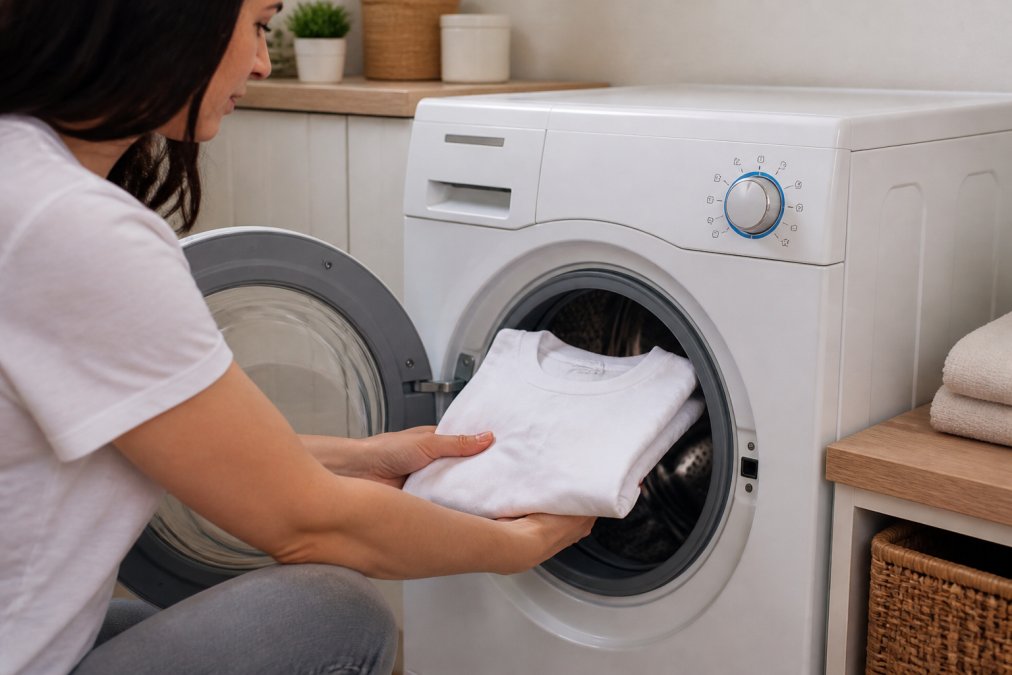
The care label on your shirt is the manufacturer's explicit instruction for how to treat that specific garment. Most quality t-shirts recommend cold water washing. Some specify a delicate cycle. Follow these instructions precisely.
Wash inside out to protect prints and reduce friction with the washing machine drum. Don't overload the machine, clothes need room to move without excessive tumbling. Use a gentle detergent and avoid bleach, which weakens cotton fibers and can cause uneven shrinkage.
Drying Methods That Minimize Shrinkage
Air drying is the gold standard. Hang the shirt or lay it flat on a clean surface. The fibers dry slowly, allowing gradual and even contraction. There's no heat, so no thermal expansion triggers additional shrinkage.
If you must use a machine dryer, use the lowest heat setting and remove the shirt while still slightly damp. Never use hot or medium heat on a high quality t-shirt. Pull items out as soon as the cycle ends, overdrying causes additional shrinkage. Fold the shirt while still slightly damp to set the shape and prevent wrinkles.
Detergent Selection and Water Hardness
Liquid detergents tend to be gentler on fibers than powder detergents. For high quality t-shirts, a simple, mild liquid detergent is safest.
Water hardness affects shrinkage too. Hard water contains minerals that interfere with detergent effectiveness, forcing it to work harder and pull more aggressively at fibers, causing more swelling and shrinkage. If you have hard water, consider using a water softener or switching to a detergent designed for hard water.
How to Stretch Out a Shrunken Shirt
If you've already experienced shrinkage, blocking is the most effective method. Wash the shirt in lukewarm water with gentle conditioner. While still wet, lay it flat and gently stretch it to the desired size. Pin or weight down the edges and let it air dry completely. This works best on shirts that have shrunk only slightly (1-2%).
Steam is another option. Hang the shirt and use a garment steamer to apply heat and moisture. While warm and damp, gently stretch it back to size. This is less reliable than blocking but works for minor shrinkage.
A third method is soaking in a solution of water and glycerin (3 parts water to 1 part glycerin). Glycerin lubricates fibers and makes them more flexible. Soak for 30 minutes, then gently stretch and block. None of these methods will return a severely shrunken shirt to its original state. Prevention is always better than recovery.
Conclusion
High quality t-shirts shrink because they're made with better cotton that has more structural integrity and more fiber tension during manufacturing. That tension makes them durable but also vulnerable to shrinkage when exposed to heat, moisture, and mechanical stress.
At Scott's T's & More, we understand that investing in quality apparel means understanding how to care for it. Our humorous t-shirts are made with premium fabrics designed to last, which means they deserve the attention that prevents shrinkage. Cold water washing, gentle cycles, air drying, and following care labels aren't inconveniences, they're the difference between a shirt that looks great for years and one that becomes unwearable after a few months.
The real secret isn't buying a shirt that won't shrink. It's buying a quality shirt and treating it with the care it deserves. That's how you get lasting value from your wardrobe.
Frequently Asked Questions
Does 100% cotton shrink in the wash?
Yes, 100% cotton shrinks naturally because cotton fibers are made of cellulose, which absorbs moisture and swells when wet. This swelling causes fiber tension to release, making the fabric contract. The amount of shrinkage depends on the washing temperature, drying method, and whether the fabric was pre-shrunk during manufacturing. Cold water washing and air drying minimize shrinkage significantly.
Why do high quality t-shirts shrink more than cheaper ones?
High quality t-shirts often use longer-staple cotton fibers and tighter knit structures that hold more dimensional stability initially. However, they may shrink more noticeably if not pre-shrunk because manufacturers prioritize fiber quality over pre-treatment. Cheaper shirts are frequently pre-shrunk aggressively during manufacturing, which reduces visible shrinkage later but can compromise fabric longevity and feel.
Can you unshrink a high-quality t-shirt?
Partially, yes. Soak the shrunken shirt in cool water with a fabric conditioner or hair conditioner for 15-30 minutes to relax the fibers. Gently stretch the shirt to its original dimensions while damp, then lay it flat to air dry. This works best on cotton and natural fiber blends. However, if heat has permanently set the shrinkage, complete recovery is unlikely. Prevention through proper washing and drying is more effective than trying to reverse shrinkage.
Is it better to air dry high-quality t-shirts to prevent shrinkage?
Yes, air drying is significantly better than tumble drying for preventing shrinkage. Tumble dryers expose fabric to sustained heat, which causes thermal expansion and fiber relaxation. Air drying eliminates heat exposure entirely, allowing fibers to retain their original dimensions. Lay shirts flat or hang them in a well-ventilated area. This method also extends the life of prints and elastic components on high-quality apparel.
Protecting your investment in quality apparel starts with understanding why shrinkage happens. Scott's T's & More creates t-shirts built to last, but they need the right care to reach their full lifespan. Follow the washing guidelines above, use cold water, air dry when possible, and your high quality t-shirts will maintain their fit and feel for years. Discover our collection of durable, hilarious designs and invest in apparel that's worth the extra care.
This article was written using GrandRanker