


Table of Contents
- Why Graphic Tees Fade and What Causes Print Damage
- Prepare Your Graphic Tees Before Washing
- Wash Graphic Tees in Cold Water with Gentle Cycles
- Best Detergent for Graphic Tees
- Air Drying Graphic Tees to Prevent Heat Damage
- How to Fix Cracked Screen Print and Restore Faded Designs
- Storage and Long-Term Care for Graphic Tees
- Conclusion
Last Updated: August 19, 2026
Why Graphic Tees Fade and What Causes Print Damage
Graphic tees fade because the inks and dyes used in screen printing, DTF (Direct to Film), and other printing methods break down under stress. Heat, friction, harsh detergents, and repeated washing cycles damage the fibers that hold the print to the fabric. Understanding what causes this damage is the first step toward protecting your investment.
The culprits are straightforward. High water temperatures weaken both the fabric and the adhesive bonds holding the print. Tumble dryers introduce intense heat that causes the printed design to crack and peel. Fabric softeners and bleach-based cleaners chemically attack the ink pigments, causing color bleeding and fading. Even the spin cycle itself creates friction that gradually wears down the graphic.
What most people miss is that the damage isn't always visible immediately. A single hot wash might not destroy a print, but repeated exposure compounds the wear. The print's surface begins cracking microscopically, water seeps into those cracks, and over time the design peels away in visible chunks. This is especially true for lower-quality prints, which is why investing in well-made graphic tees makes a real difference, premium prints withstand proper care far better than bargain alternatives.
Different printing methods have different vulnerabilities. Screen-printed designs sit on top of the fabric, making them prone to cracking from excessive heat and friction. DTF prints are more flexible but can still fade if exposed to harsh chemicals. Understanding your specific tee's printing method helps you tailor your care approach for maximum longevity.
Prepare Your Graphic Tees Before Washing
Before your graphic tees ever hit the washing machine, preparation is critical. Turning the shirt inside out is the single most effective step you can take. This simple action protects the printed design from direct friction against the drum and other clothes, dramatically reducing wear.
Check the care tag first. Most graphic tees recommend cold water and gentle cycles, though specific instructions vary by manufacturer. Read these carefully, they're based on the shirt's fabric blend and print type. Turn the shirt inside out so the graphic faces inward. This shields the print from direct contact with the washing machine drum and prevents it from rubbing against other garments.
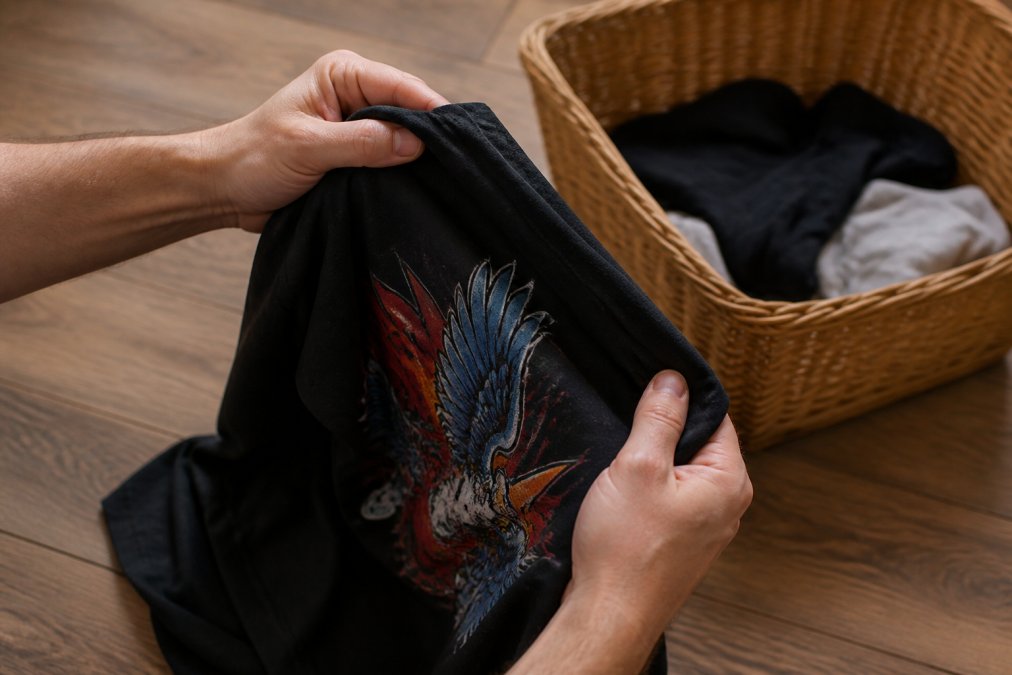
For heavily soiled tees, a pre-soak in cold water with mild soap can help lift stains without aggressive scrubbing. Soak for 15-30 minutes, then gently agitate the fabric. Avoid rubbing or twisting, let the water do the work. For stubborn stains on the print itself, use a soft brush or cloth to gently dab the area rather than scrub it. Aggressive scrubbing breaks down the ink and damages fiber integrity.
Separate your graphic tees by color. Darker prints should be washed separately from light-colored garments to prevent color bleeding. If you have multiple tees with prints, washing them together is fine, just keep them away from items that might bleed dye. This simple sorting step prevents unexpected discoloration.
Use a mesh laundry bag if you're washing multiple graphic tees at once. This barrier reduces friction between the tee and the drum, and between the tee and other garments. It's a small investment that extends the life of your favorite designs significantly.
Wash Graphic Tees in Cold Water with Gentle Cycles
Cold water washing is non-negotiable for preserving graphic tees. Heat breaks down the adhesive bonds between the print and fabric, accelerates dye fading, and weakens the cotton fibers themselves. Cold water prevents all three of these problems while still cleaning effectively.
Set your machine to the gentlest cycle available, usually labeled "delicate," "hand wash," or "gentle." These cycles use slower spin speeds and less mechanical agitation, reducing the friction that wears down prints. The lower spin speed also means less water is forced through the fabric, which helps preserve color and print integrity.
Water hardness affects how well detergent works and how much residue remains on the fabric. Hard water leaves mineral deposits that can dull colors and leave a film on the print. If you have hard water, consider using a water softener or adding a commercial water softening agent to your wash. Alternatively, use a detergent specifically formulated for hard water conditions. This extra step prevents detergent residue from accumulating on your tees over time.
Don't overload the washing machine. Cramming too many clothes into a single load increases friction and reduces the machine's ability to rinse thoroughly. Fill the drum about three-quarters full at most. This gives your graphic tees room to move freely without excessive agitation against other garments.
Use cold water temperatures consistently, aim for below 60°F if possible. Some machines offer "cold" settings that still use slightly warm water; check your machine's manual to confirm the actual temperature. The colder the water, the better protected your prints will be.
Best Detergent for Graphic Tees
Choosing the right detergent is critical for preserving both the fabric and the print. Mild, pH-neutral detergents are your best option. Harsh detergents with high pH levels break down the dyes and damage delicate fibers. Look for detergents labeled "gentle," "mild," or "suitable for delicate fabrics."
Avoid detergents containing bleach, optical brighteners, or heavy enzymes. Bleach is obvious, it strips color and damages prints directly. Optical brighteners are chemicals that make whites appear brighter by reflecting light; they're unnecessary for graphic tees and can cause discoloration. Enzymes break down protein stains but can also damage delicate fibers and dyes, especially with repeated use.
Liquid detergents are generally preferable to powders for graphic tees. Powder detergents can leave residue on fabric, especially in cold water, which dulls colors and leaves a visible film on prints. Liquid detergents dissolve more completely in cold water and rinse out more thoroughly.
Use less detergent than you might think necessary. A quarter to half the recommended amount is usually sufficient for lightly soiled tees. Excess detergent leaves residue that accumulates with each wash, eventually making the print look dull and faded even if the colors haven't actually faded. More detergent doesn't clean better, it just leaves more buildup.
Consider using detergents specifically formulated for dark or colored fabrics. These products are pH-balanced to protect color and often contain additives that help preserve dye. Many brands offer "color-safe" or "darks" formulas that work well for graphic tees with darker prints.
Air Drying Graphic Tees to Prevent Heat Damage
Avoid the dryer entirely. Tumble dryers are one of the leading causes of print cracking, peeling, and fading. The combination of high heat and mechanical tumbling creates stress that no print can withstand long-term. Air drying takes longer but preserves your tees dramatically better.
Lay the tee flat on a clean, dry surface, a bed, table, or drying rack works well. Laying flat prevents stretching that can occur when garments hang, and it allows air to circulate evenly across both sides of the fabric. If you must hang-dry, use a padded hanger and ensure the tee is in a shaded area away from direct sunlight.

Direct sunlight can fade prints over time, especially lighter colors and pastels. Dry your tees indoors or in a shaded outdoor area. A well-ventilated room with air circulation is ideal. In humid climates, a fan nearby speeds up drying without adding heat.
Drying time typically ranges from 4-12 hours depending on humidity, air circulation, and fabric thickness. Patience here pays off, rushing the process by using a dryer or placing the tee in direct sun negates all your careful washing efforts.
Once dry, fold or hang the tee immediately. Leaving it crumpled or damp for extended periods can cause wrinkles that are difficult to remove without heat, and moisture sitting on fabric can lead to mildew or odor problems. Fold along the seams to minimize creasing, and store in a cool, dry place.
How to Fix Cracked Screen Print and Restore Faded Designs
Even with perfect care, older graphic tees eventually show wear. Minor cracking or slight fading doesn't mean the tee is ruined, several repair techniques can restore appearance or prevent further damage.
For cracked screen prints, fabric glue can help seal small cracks and prevent them from spreading. Apply a thin layer of flexible fabric adhesive under the cracked area, press gently, and allow it to cure according to the product instructions. This won't restore the original appearance completely, but it stops the crack from expanding and prevents the print from peeling further.
Faded prints are harder to restore, but fabric paint designed for use on clothing can refresh the design. Clean the tee thoroughly and let it dry completely. Use a small brush to carefully apply fabric paint over the faded areas, matching the original color as closely as possible. Allow the paint to cure fully before washing, typically 24 hours. This approach works best for solid-color designs; complex graphics are more difficult to touch up convincingly.
For seriously damaged prints, consider having the tee professionally reprinted or redecorated by a local screen printing shop. Many shops can strip the old print and apply a new design, though this costs more than buying a replacement tee. Reserve this option for designs with sentimental value or limited availability.
Prevention is always better than repair. Proper washing and drying techniques from day one ensure your graphic tees from Scott's T's & More maintain their vibrant appearance for years. Quality prints resist damage far better than cheaper alternatives, making the initial investment worthwhile.
Storage and Long-Term Care for Graphic Tees
How you store your graphic tees between wears affects their longevity. Fold rather than hang whenever possible. Hanging stretches the shoulder seams and can distort the fit, especially for heavier tees. Fold along the seams and stack neatly in a drawer or on a shelf.
Keep your tees in a cool, dry location away from direct sunlight. Prolonged exposure to UV light fades prints and weakens fabric fibers. A dark closet or dresser drawer is ideal. Avoid damp basements or humid bathrooms where moisture can encourage mildew or odor.
Store graphic tees separately from items with rough textures or sharp objects. Zippers, buckles, and velcro can snag the print or fabric. If you must store multiple tees together, place tissue paper between them to reduce friction.
Rotate your tees regularly. Wearing the same graphic tee repeatedly, even with proper care, causes more wear than spreading use across multiple designs. A simple rotation system, wearing each tee every third or fourth week, extends the life of your entire collection.
Check stored tees occasionally for signs of moisture, odor, or pest damage. If you notice any issues, remove the affected tee immediately and address the problem. A single damp tee in a drawer can affect the entire stack.
For long-term storage of tees you're not wearing regularly, consider vacuum-sealed bags in a climate-controlled area. These bags protect from dust and pests while taking up minimal space. Just ensure the storage area isn't too hot, as heat can set in wrinkles and damage prints even without active washing.
Keeping your graphic tees looking fresh requires consistency, but the effort pays off. Washing in cold water with gentle detergent, air drying, and careful storage are the foundations of long-term care. When you invest in quality designs from Scott's T's & More, like our Vintage 1968 tee or Pirate Ghost Ship design, proper care ensures those witty graphics stay vibrant and wearable for years. Start with these fundamentals today, and your favorite tees will remain in your rotation far longer than you'd expect.


| Care Step | Method | Frequency | Impact |
|---|---|---|---|
| Prepare | Turn inside out, use mesh bag | Every wash | Reduces friction damage by 60%+ |
| Wash | Cold water, gentle cycle | Every 3-4 wears | Preserves color and print integrity |
| Detergent | Mild, pH-neutral formula | Every wash | Prevents dye breakdown and residue |
| Dry | Air dry flat or hang | Every wash | Eliminates heat cracking entirely |
| Store | Fold in cool, dry place | Between wears | Maintains shape and prevents fading |
Frequently Asked Questions
Is it better to wash graphic tees inside out?
Yes, absolutely. Washing graphic tees inside out protects the print from direct friction and water agitation. Turn the shirt inside out before placing it in the washer. This simple step reduces color fading and print cracking significantly by minimizing contact between the graphic and other garments. It's one of the most effective techniques for preserving print integrity.
What is the best detergent for printed t-shirts?
Use a mild, bleach-free detergent specifically formulated for delicate fabrics or colors. Look for products labeled as gentle or for dark colors to minimize fading. Avoid detergents with harsh chemicals, optical brighteners, or enzymes that can break down fabric fibers and degrade the print. Cold-water detergents work especially well since they're designed to clean effectively without heat.
Can you put graphic tees in the dryer?
No, avoid the dryer entirely. Heat damages both the fabric and the print through shrinkage and print cracking. High temperatures cause color bleeding and can permanently set stains. Air drying is always the safer choice. Lay flat or hang your graphic tees to dry naturally, which preserves garment longevity and keeps prints vibrant for years.
How do you fix a faded graphic tee?
Unfortunately, faded prints cannot be fully restored to original brightness. However, you can prevent further fading by following proper care: wash in cold water, use gentle cycles, air dry, and store away from direct sunlight. For cracked or peeling prints, fabric paint or iron-on patches offer temporary cosmetic fixes, but replacement is often more practical for heavily damaged designs.
This article was written using GrandRanker