


Table of Contents
- Why Graphic T-Shirt Print Fades in the First Place
- How to Wash Screen Printed Shirts Without Damaging the Ink
- Air Drying vs Machine Drying Graphic Tees
- Stain Removal on Printed Areas Without Wrecking the Design
- How to Fix Cracked T-Shirt Print Before It Gets Worse
- Storage Tips That Protect Your Graphic Tee Print Long-Term
- Conclusion
Last Updated: August 15, 2026
Why Graphic T-Shirt Print Fades in the First Place
Graphic tee prints fade because heat, friction, and harsh chemicals break down the bond between ink and fabric. Screen print and direct-to-garment inks sit on top of the fabric rather than being woven into it, making them vivid but vulnerable. Every wash cycle attacks the print through agitation that scrapes ink particles off cotton fibers, hot water that softens the ink binder, and harsh detergents that dissolve adhesive compounds.
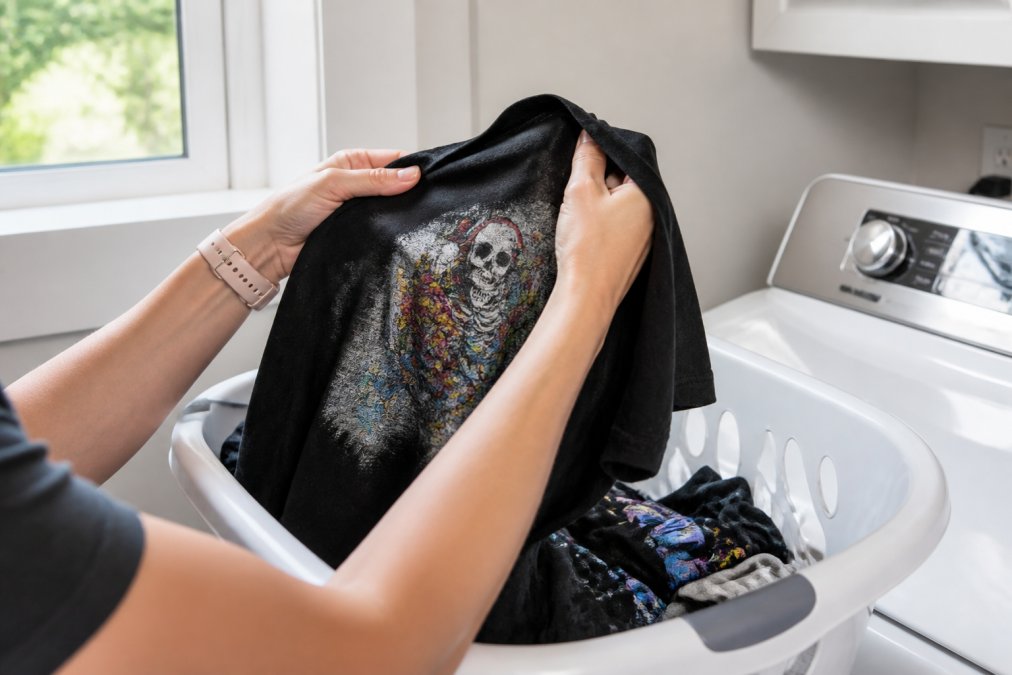
Heat and UV exposure also cause damage. Leaving a shirt in direct sunlight causes color bleaching that no laundry routine can reverse. Water hardness compounds the problem, dissolved minerals in hard water interact with detergent residue, dulling colors and accelerating degradation. According to the U.S. Geological Survey's water hardness data, a large portion of American households have moderately hard to very hard water.
Cracking and peeling signal that the ink layer has lost flexibility. Once a crack forms, water and friction widen it during subsequent washes. The bottom line: how to prevent graphic t-shirt print from fading starts with understanding that you're protecting a surface coating, not dyeing the fabric itself.
How to Wash Screen Printed Shirts Without Damaging the Ink
Washing is where most damage prevention happens. The washing machine is the single biggest threat to ink adhesion, but deliberate changes to your laundry routine will dramatically extend the life of any graphic tee.
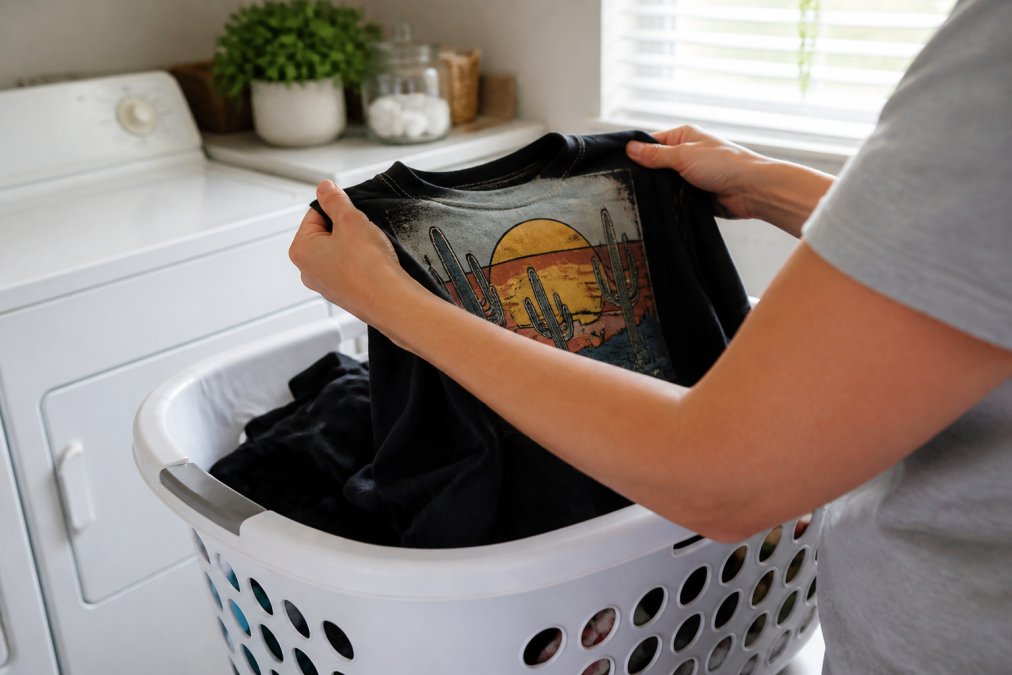
Turn the Shirt Inside Out Before Every Wash
Turning your shirt inside out is the single most effective thing you can do for print preservation. It shields the graphic from direct contact with the drum, other garments, and agitation forces during the wash cycle. This one step alone significantly reduces friction on the ink surface while maintaining cleanliness. Make it automatic by flipping the shirt inside out at the point of undressing.
Choose the Right Detergent and Skip the Bleach
Use a mild, liquid detergent without optical brighteners or bleaching agents. Powder detergents leave particles that abrade the print surface, and enzyme-heavy formulas can break down organic compounds in screen print inks. Bleach, even color-safe varieties, attacks ink pigments and accelerates fading and peeling. Avoid fabric softener, which coats fibers with a waxy film that interferes with ink adhesion.
Use Cold Water and the Delicate Cycle
Cold water wash is non-negotiable for printed garments. Hot water softens the binder in screen print inks, causing them to lose their grip on the fabric. The delicate cycle reduces agitation speed and wash duration, minimizing friction against the print surface. As noted in the Textile Exchange's fiber and fabric care guidelines, cold water washing also reduces energy consumption significantly.
Wash with Similar Fabrics and Reduce Wash Frequency
Wash similar fabrics together to reduce mechanical abrasion from heavier garments. More importantly, reduce how often you wash graphic tees. Unless a shirt is visibly soiled or odorous, it doesn't need a full wash cycle after every wear. A practical rule: spot clean minor marks, air out the shirt, and run a full wash every two to three wears under normal conditions.
Air Drying vs Machine Drying Graphic Tees
Air drying wins. Tumble dry settings expose a graphic tee to sustained heat for 30 to 60 minutes, causing the ink layer to expand and contract repeatedly, weakening its bond to the fabric and accelerating cracking. Heat also causes shrinkage in cotton and cotton blend garments, distorting the print geometry.
Air drying eliminates both problems. Lay the shirt flat on a clean surface or hang it on a drying rack with the print side facing inward. Flat drying is preferable for heavier garments because hanging can stretch wet fabric and stress the ink layer.
| Drying Method | Heat Exposure | Shrinkage Risk | Print Impact | Recommended? |
|---|---|---|---|---|
| High heat tumble dry | High | High | Cracking, fading | No |
| Low heat tumble dry | Moderate | Moderate | Gradual fading | Rarely |
| Air dry flat | None | None | Minimal | Yes |
| Air dry on hanger | None | Low | Minimal | Yes |
If you must use a dryer, use the lowest heat setting and remove the shirt while still slightly damp. Never iron directly on a graphic print. If pressing is needed, turn the shirt inside out and use low heat with a pressing cloth between the iron and fabric.
Stain Removal on Printed Areas Without Wrecking the Design
Stain treatment on a printed area requires a different approach than treating the rest of the shirt. Many stain removers contain solvents that dissolve ink pigments as effectively as they dissolve stains.
Here's the correct process for stain treatment on or near a print:
- Act immediately. Fresh stains are far easier to remove than set ones. Blot gently with a clean cloth.
- Avoid rubbing. Rubbing spreads the stain and creates friction on the ink surface.
- Test any product away from the print first. Check for color change or ink lift before touching the graphic.
- Use a mild dish soap solution. A small amount of gentle dish soap diluted in cold water is often the safest option.
- Rinse with cold water. Never use hot water on a stain near a graphic.
- Let it air dry before evaluating. Stains often look worse when wet.
For oil-based stains, apply cornstarch for 30 minutes before brushing off to absorb the oil. According to the American Cleaning Institute's fabric care resource, pre-treating stains with the wrong product is one of the most common causes of permanent fabric damage.
How to Fix Cracked T-Shirt Print Before It Gets Worse
For minor surface cracking where ink is still largely intact, a fabric medium or textile paint can be worked into the cracks to restore flexibility. Apply a small amount with a soft brush and allow it to cure fully before washing.
For more significant peeling where sections of ink have lifted, a heat press or household iron on low setting can sometimes re-adhere the lifted portion. Place a pressing cloth over the peeling area and apply gentle heat for 10 to 15 seconds. Press firmly but do not drag. Allow to cool completely before handling.
Standard acrylic paint won't work, it's too rigid for fabric and will crack again within a wash or two. Use products specifically formulated for textile applications.
Storage Tips That Protect Your Graphic Tee Print Long-Term
Folding vs. hanging: For long-term storage, fold graphic tees rather than hanging them. Hanging causes fabric to stretch under its own weight, distorting the print. If you hang them for daily access, use a wide-shouldered hanger that distributes weight evenly.
Fold print-side in. When folding for a drawer or shelf, fold the shirt so the graphic faces inward. This protects the print from friction and reduces exposure to light and dust.
Avoid compression. Stacking too many shirts compresses the bottom garments, which can cause ink to crack. Keep stacks to reasonable depth.
Light and UV exposure: Direct sunlight causes fading even in storage. Store graphic tees away from direct light sources in a dark drawer or closed wardrobe.
Humidity and moisture: Store garments in areas with adequate airflow and no moisture buildup. For seasonal storage, wash and dry completely, fold print-side in, and use a breathable cotton storage bag rather than plastic, which traps moisture.
Graphic tees take a beating from the average laundry routine, and most of that damage is avoidable with deliberate habits. Cold water, the delicate cycle, inside-out washing, and air drying handle the bulk of prevention. Storage and stain treatment cover the rest. Browse our collection and pick up something worth protecting.
Frequently Asked Questions
Does cold water actually prevent shirt prints from fading?
Yes, cold water is one of the most effective ways to slow ink degradation on a graphic tee. Hot water breaks down the bond between screen print ink and the fabric fibers, causing cracking, peeling, and fading much faster. Washing at or below 30°C (cold cycle) preserves ink adhesion significantly longer. Combined with turning the shirt inside out and using a gentle detergent, cold water washing is the single biggest change you can make to your laundry routine.
Should you turn graphic tees inside out before washing?
Turning a graphic tee inside out before every wash is one of the simplest and most effective garment care habits you can build. It shields the printed surface from direct agitation against other fabrics, reduces friction that causes cracking and peeling, and limits exposure to detergent residue that can dull colors. Whether your shirt uses screen print, direct-to-garment, or heat press printing, inside-out washing extends the life of the design noticeably over time.
How do you make graphic t-shirts last longer overall?
Wash cold, inside out, on the delicate cycle. Air dry flat instead of using a tumble dryer. Skip bleach and fabric softener, since both break down ink adhesion over time. Spot-treat stains on printed areas carefully rather than soaking the whole shirt. Store tees folded rather than on hangers to prevent the print from stretching. Reducing how often you wash the shirt, spot cleaning between wears when possible, also slows fading and shrinkage significantly.
Can a cracked or faded graphic tee print be fixed?
Minor cracking on screen print or heat press designs can often be improved using a fabric-safe iron-on adhesive or textile medium, applied carefully with a cloth barrier between the iron and the print. For direct-to-garment prints, fading is harder to reverse, but fabric paint in a matching color can fill in worn spots. Severely peeled or cracked prints are difficult to fully restore, so prevention through proper washing and drying habits is far more effective than repair.
This article was written using GrandRanker